Perinatal Project
Neonatal Abstinence Syndrome (NAS)
Did you know that a baby cannot be born addicted to substances? Rather, they may be born experiencing withdrawal if they have been exposed to substances before birth; that is not the same thing as addiction.
Neonatal Abstinence Syndrome (NAS), also known as Neonatal Opioid Withdrawal Syndrome (NOWS), occurs when a baby is exposed to substances—most commonly opioids—during pregnancy and experiences withdrawal shortly after birth. After delivery, the sudden separation from substance exposure can lead to a range of symptoms as the infant’s body clears the substances from their system. These symptoms can vary widely depending on the type of opioid, dosage, duration of exposure, maternal and infant metabolism, and use of other substances such as nicotine.
Babies with NAS/NOWS may show signs of central nervous system irritability (such as high-pitched crying, tremors, or difficulty sleeping), gastrointestinal issues (vomiting, diarrhea, feeding challenges), and autonomic instability (sweating, fever, frequent yawning or sneezing). Because these symptoms can be uncomfortable and sometimes severe, early intervention during pregnancy and careful monitoring after birth are essential to supporting infant health and family well-being.
With timely, compassionate care, most infants with NAS/NOWS recover and go on to thrive.
About the HOPE Consortium Perinatal Project
The Family Health Center of Marshfield, Inc. (FHC), on behalf of the HOPE Consortium, supports efforts related to care during the perinatal period with funding from a Health Resources and Services Administration (HRSA) Rural Communities Opioid Response Program – Neonatal Abstinence Syndrome (RCORP-NAS) grant. This project focuses on improving care and support for women who are pregnant, recently gave birth, or are of childbearing age who have a history of—or may be at risk for—substance use, along with their children, families, and caregivers.
Originally launched in the HOPE Consortium – North Region in 2020, the Perinatal Project has been expanded to include families in the Central and West Regions with services continuing through August 2026. The goal of the project is to strengthen access to supportive, culturally responsive care that promotes healthy pregnancies, safe births, and strong family connections.
If you or someone you know may benefit from these services—or would like to learn more—please reach out to the HOPE Consortium. Together, we can support healthy beginnings for mothers, babies, and families.
Birth Doula Project
Since 2020, FHC has trained and supported birth doulas to improve the care of pregnant women affected by substance use. This training meets DONA International requirements for certification eligibility and includes:
- Comprehensive birth doula skills
- Cultural responsiveness for special, rural populations
- Training in trauma-informed care and substance use disorder
- Skills for navigating healthcare systems with and on behalf of clients
- Emphasis on empathy, healthy boundaries, compassionate support, and supporting special populations in the service area
After completing their training, doulas receive ongoing support to strengthen their skills and begin serving families. Supports include:
- Complimentary DONA International membership
- Ongoing consultations and an annual gathering with trainers
- Special birth ceremony opportunities and DONA certification guidance
- Access to a free library of DONA-required reading
- Tools and supplies for doula work
- Scholarships or training funds for continued education
- Funding to attend births, as required for certification
Perinatal Project Outcomes (2022–2025)
- Trained 55 birth doulas, with 19 actively providing services in at least 20 communities
- Increased education for health care systems, child and family service programs, county and tribal organizations, and other organizations providing care during the perinatal period
- Collaborated with community agencies and hospitals to enhance family-centered care
This program is funded in part by Family Health Center of Marshfield, Inc. and the Health Resources and Services Administration (HRSA) of the U.S. Department of Health and Human Services (HS) RCORP-NAS award. The contents are those of the author. They may not reflect the policies of HRSA, HHS, or the U.S. Government.
Project Resources
This overview highlights key information related to Neonatal Abstinence Syndrome (NAS) and perinatal substance use, with a focus on understanding needs, supports, and systems of care.
View the Perinatal Care Project Overview (PDF).
This roster includes current HOPE Consortium members representing organizations and systems working together to strengthen prevention, treatment, and recovery efforts. Current as of 6-12-25.
View the Membership Roster (PDF).
Resources
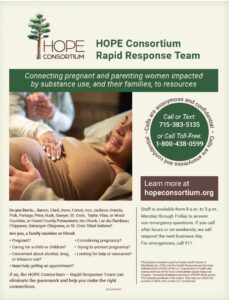
Rapid Response Team
Connecting pregnant and parenting women impacted by substance use, and their families, to resources
Call Toll-Free: 1-800-438-0599 or Call/Text: 715-383-5135
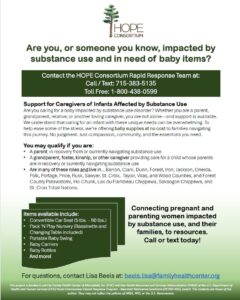
Baby Items Program
Providing free baby essentials to pregnant and parenting families impacted by substance use
Call Toll-Free: 1-800-438-0599 or Call/Text: 715-383-5135
Doula and Lactation Support
Complete the Doula and Lactation Support Provider Survey if you provide doula or lactation support services within the HOPE Consortium service area.
View the Doula and Lactation Provider Resource Guide (PDF). This list is not comprehensive and reflects information shared with Family Health Center. Inclusion is for informational purposes only and does not constitute an endorsement of any listed provider or service. Updated on 8-13-26.